What is a Multi-Country Biblical Tour Itinerary: Israel, Jordan, and Egypt?
A Multi-Country Biblical Tour Itinerary: Israel, Jordan, and Egypt links the physical geography of scripture into one continuous route. Instead of treating each country as a separate holiday, the plan connects sites that scripture itself connects — the exodus route, the wilderness crossing, and the towns where Jesus walked. This is the core idea behind faith-based travel: the map becomes a timeline.
The trip usually opens in Egypt, moves through Jordan, and finishes in Israel, though some operators reverse the order. Either way, a well-built biblical tour itinerary follows the same logic as the Bible narrative — exile, wandering, and arrival. A Holy Land itinerary built this way gives travelers a sense of distance and hardship that a single-country trip cannot replicate.
The sequence mirrors the early life of Moses in Egypt, the forty years of wandering associated with Jordan's desert terrain, and the ministry years of Jesus concentrated around the Sea of Galilee and Jerusalem. Walking the same corridor, even by air-conditioned coach, gives context that reading alone cannot.
Why combine Israel, Jordan, and Egypt in one biblical trip?
Splitting these three countries into separate trips breaks the scriptural continuity that makes the journey meaningful. A Christian pilgrimage itinerary that only covers Israel misses the exile chapter in Egypt and the wilderness chapter in Jordan. Combined, the three form a full arc: Egypt stands for exile and preparation, Jordan stands for wilderness and promise, Israel stands for fulfillment.
Because these nations share land borders, a multi-country pilgrimage is also geographically logical, not just spiritually logical. The distance between Cairo and Jerusalem is smaller than many travelers expect, and the proximity underlines how compact the biblical world actually was. A faith-centered travel plan that respects this geography helps groups understand scale instead of just names on a map.
Crossing land borders between these countries does involve paperwork and screening that differs from an internal flight. Anyone building a Bible lands tour across Israel, Jordan, and Egypt should review official entry procedures before finalizing dates, since crossing points can have different hours and document rules than airports.
How many days do you need for an Israel, Jordan, and Egypt tour?
There is no single correct answer, but the range that works for most groups sits between 10 and 15 days. A shorter trip forces hard choices about what to skip; a longer one allows the biblical journey to breathe. The right number of days depends less on ambition and more on how much walking, heat, and border crossing a group can handle without exhaustion.
Is 10 to 11 days enough?
Ten or eleven days can cover the headline sites, but something has to give. Deeper Galilee exploration — extra time in Capernaum, a full day around the Sea of Galilee, or side visits to smaller Jordanian ruins — is usually the first casualty. Groups on this schedule tend to move fast and rest little.
When is 15 days the sweet spot?
Two weeks gives room for slower mornings, a buffer day around each border crossing, and full days in both Jerusalem and Cairo instead of half-day stops. It also allows recovery time after physically demanding stretches like Mount Sinai or Petra, which matters for older travelers or larger groups with mixed fitness levels.
| Trip length | Best for | What gets reduced |
|---|---|---|
| 10–11 days | First-time visitors, tight budgets | Galilee depth, secondary Jordan sites |
| 12–13 days | Balanced groups wanting variety | Rest days, extended Petra time |
| 15 days | Comprehensive spiritual journeys | Nothing major, minimal compression |
What biblical sites should be included in Egypt and Jordan?
Before crossing into Israel, both Egypt and Jordan hold sites that anchor the earlier chapters of the biblical story. Skipping them turns the trip into an Israel-only tour with two extra stamps in a passport, rather than a genuine Egypt biblical sites and Jordan biblical sites experience.
Historic landmarks of faith in Egypt
Old Cairo holds churches associated with the Holy Family's traditional flight into Egypt, giving early context to the exile theme. Further southeast, the Saint Catherine area and the Mount Sinai trip form the traditional setting for the giving of the Law. The site's standing is documented on the UNESCO heritage list, which records its long history as a place of monastic and pilgrimage significance.
Scriptural landscapes in Jordan
A Mount Nebo visit offers the panoramic view traditionally linked to Moses looking over the Promised Land before his death. Closer to the Jordan River, Al-Maghtas — known as Bethany Beyond the Jordan — marks the traditional baptism site of Jesus. Its historical documentation appears on UNESCO's register, supporting its role as a genuine pilgrimage destination rather than a modern reconstruction. Groups with extra time sometimes add a Petra extension, though it sits outside the core biblical route.
What biblical sites should be included in Israel?
Israel functions as the spiritual peak of the itinerary because it holds the New Testament chapters the earlier two countries only set up. Jerusalem pilgrimage stops, a Sea of Galilee tour, and the combined Nazareth and Bethlehem itinerary give the trip its emotional center.
The Northern Region and the ministry of Jesus
Nazareth marks the childhood years, while Capernaum and the Mount of Beatitudes cover the early ministry period around the lake. A boat crossing on the Sea of Galilee is often the quietest moment of the whole trip, away from crowds and traffic.
Judea and the culmination of the pilgrimage
From the north, the route moves south through Bethlehem, then into Jerusalem itself — the Mount of Olives, the Garden of Gethsemane, and the Old City. A Dead Sea and Jordan River route often closes out this section, tying the lowest point on earth back to the river where the baptism story began.
You are welcome to visit the attached link and see for yourself: talyatours.com.
When is the best time of year for a multi-country biblical tour?
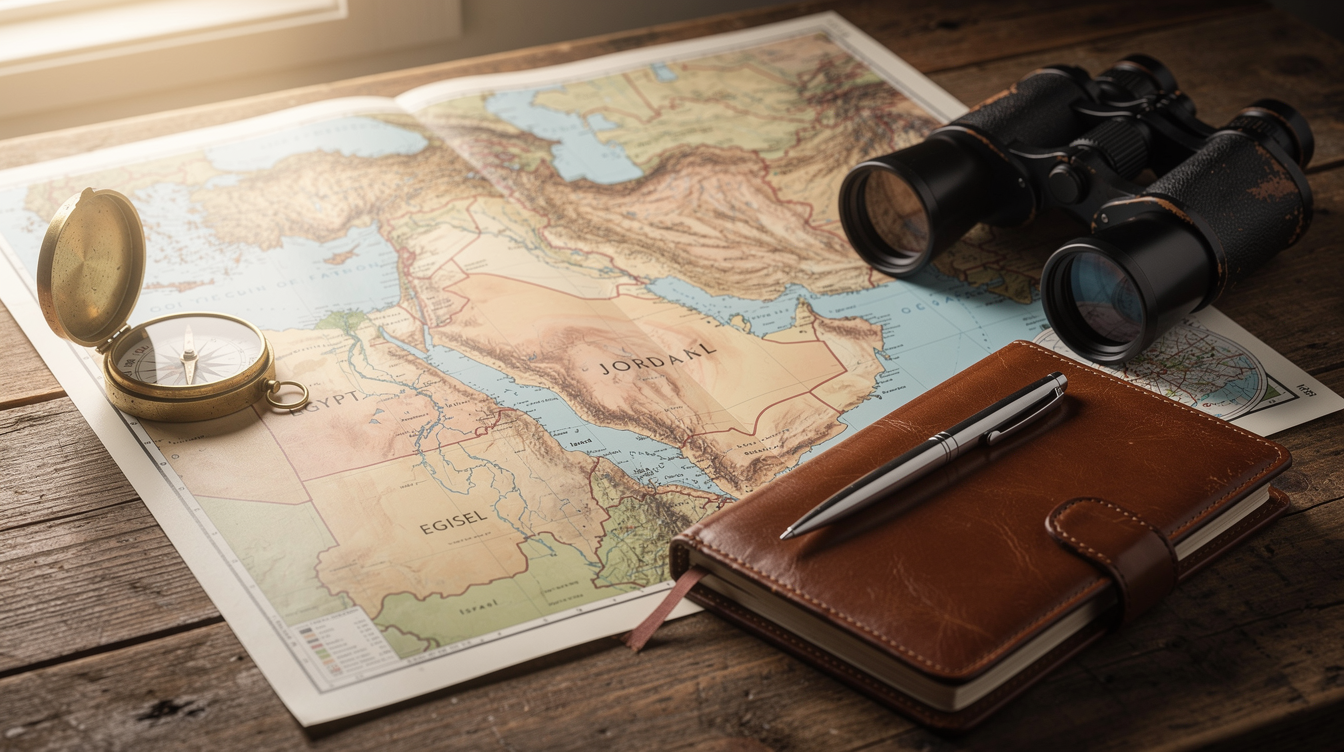
Weather across Egypt, Jordan, and Israel varies enough that timing changes the physical comfort of the whole trip, not just one stop. Anyone planning a custom Christian tour across all three deserts needs to weigh heat, crowds, and rain together rather than checking one country's forecast alone.
Spring travel advantages
March through May brings moderate desert heat and green landscapes rare later in the year. Easter season draws large crowds to Jerusalem specifically, so travelers prioritizing quiet reflection may prefer shoulder weeks rather than Holy Week itself.
Fall travel advantages
September through November often gives the most comfortable conditions for physical stops like hiking Mount Sinai before sunrise or walking the long approach into Petra. Temperatures drop enough to make midday walking manageable without the spring crowds.
Summer and winter tradeoffs
Summer heat in Cairo can make afternoon sightseeing difficult, pushing itineraries toward early starts and long midday breaks. Winter brings rain to Jerusalem and occasional cold at higher elevations like Mount Nebo, which changes packing needs more than most travelers expect.
How difficult is crossing borders between Egypt, Jordan, and Israel?
Crossings involve standard passport control and sometimes vehicle changes, since coaches generally cannot cross directly. Wait times vary by season and time of day, so operators typically build buffer time into the schedule around each crossing point.
Can the itinerary be adjusted for older travelers?
Yes. Sites like Mount Sinai or Petra involve walking or climbing, and itineraries can substitute lower-effort alternatives or add rest days without dropping the core biblical sequence.
Is a guide required at each stop?
Most religious sites allow independent visits, but a knowledgeable guide adds historical and scriptural context that self-guided visits typically miss, especially at layered sites like Old Cairo or the Old City of Jerusalem.
Does the order of countries matter?
Not strictly. Some groups start in Israel and end in Egypt, reversing the chronological flow for logistical reasons such as flight availability, without losing the overall narrative structure.
About the Business
Talya Tours works as a tour operator focused on custom-tailored travel across Israel and the surrounding Bible lands, serving Christian pilgrims, religious groups, business travelers, and individual visitors from around the world. The team builds itineraries around the religious focus, denominational preferences, travel pace, and physical capabilities of each group rather than applying one fixed template. Particular attention goes toward smooth multi-country land logistics, coordination with experienced local biblical guides, and dependable accommodation, so that groups moving between Egypt, Jordan, and Israel can focus on the spiritual journey rather than the travel arrangements around it.